Welcome To Stride Theory!


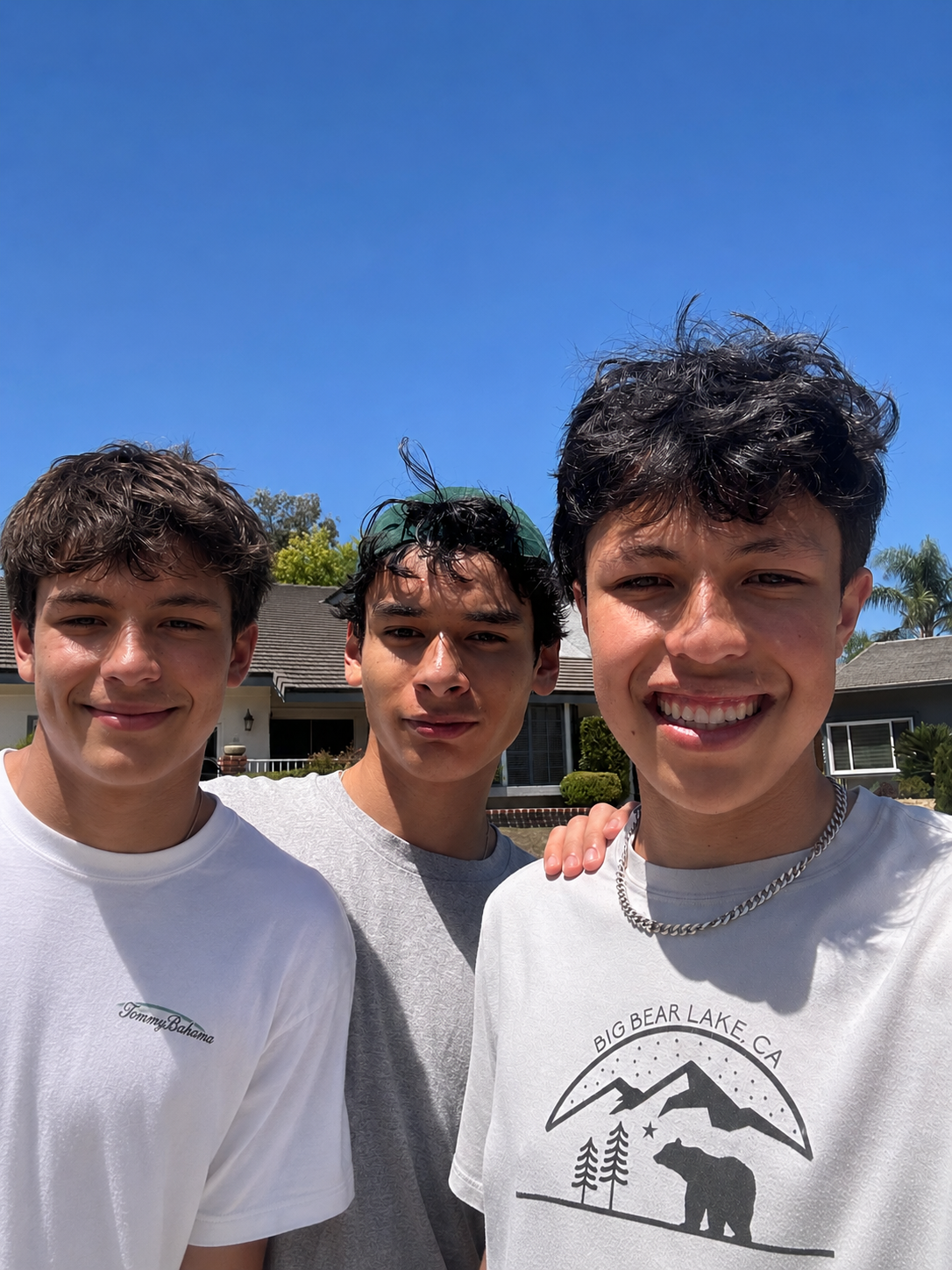


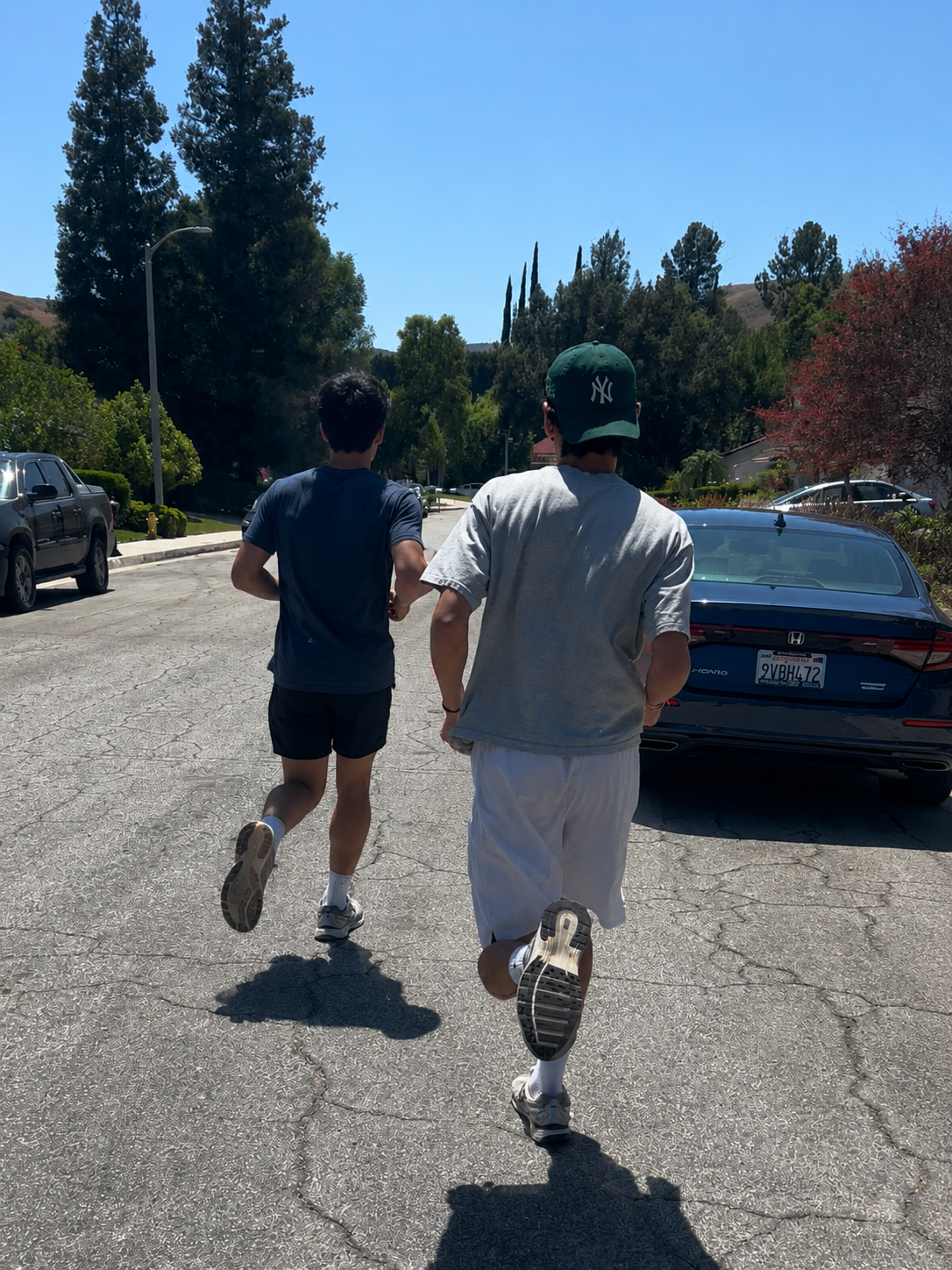



What We Do
Every run starts the same way: with a question. The kinds of questions that resist quick answers and stay with you long after the conversation ends. Such as: Is objective morality possible?
What separates science from pseudoscience? Why did people back then believe what they did? Should you change your mind or keep to your values? What's the balance? Why do we push through pain if it's literally our bodies telling us to stop?
Stride Theory is built on the idea that thinking changes when people leave the classroom, step away from their screens, and engage with ideas as they move through the world. Our discussions draw on philosophy, science, history, ethics, religion, and personal experience, but no topic is off-limits, and no single perspective is treated as final. We are not searching for consensus. We are searching for better questions, clearer thinking, and a deeper understanding of ourselves and the world around us. Sure, some ideas are best explored sitting at a desk. But most require a few miles in the process.

FREQUENT MEETING SPOTS:
AND MORE SPOTS, TOO!


HIGHLINE CANAL
Cherry creek reservior
Flat, quiet, and consistent. This is where conversations lock in and stay steady, with long stretches that make it easy to settle into a rhythm and think without interruption. Good for sustained discussions that build over time.
Concrete paths, open water, and a steady flow of movement. This spot creates physical and mental space, making it easier to step back and look at bigger questions from a distance. Conversations tend to expand here rather than narrow.
daniel's park
Open space, jagged elevation, and long views. The terrain adds effort, which tends to strip conversations down to what actually matters. Ideas here tend to get simpler, sharper, and more direct.
THE STRIDE THEORY
Run clubs train the body. Discussion groups train the mind. We do both at the same time. This club runs, thinks, and debates together in pursuit of a deeper understanding. No philosophy background required. No pace pushing required.
Stride Theory Colorado is a philosophy running club built on a simple idea: thinking should move. We reject the idea that philosophy belongs only in classrooms, books, or controlled discussions. Instead, we bring it into motion, into effort, and into real time.
When we sit still, we tend to organize ideas neatly. We repeat what we already believe in, maybe in cleaner language. We unconsciously optimize for sounding correct rather than doing the dirty work of discovering what is true, no matter how messy it is.
We strongly believe that active movement changes the structure of one's thought.
When you are running, you cannot fully control your pacing, your breath, and your language at the same time. That limitation matters, as this strips away mere performance and forces a more immediate form of thinking: less edited, more reactive, which is ironically more honest.
We treat this messier state as productive, not rash or unpolished.
From this starting point, we build a living curriculum. While sitting still, we might gravitate toward rigid structures of learning, such as a hierarchy of “important philosophers,” a strict order in what to learn and when, or a simple linear progression of ideas. Instead, while running, one can instantly shift between work with problems that cut across domains and resist simple justifications in topics such as identity. You can pull from many sources to form a complex, nuanced opinion rather than sticking to one source. Some questions are ancient. Some are personal but scale outward. Questions include: What counts as a justified belief when evidence is incomplete? How do social environments shape what people think is reasonable? Where does responsibility begin when outcomes are distributed across systems rather than individuals? Is “objective morality” meaningful in a world where experience is unevenly distributed?
Running naturally encourages people to intentionally move between frameworks rather than staying inside one. A single question might be approached through existentialism, then through cognitive science, then through ethical theory, then through lived experience.
This also means the structure is collaborative by design. The direction of the project is not fixed just by me-I only help organize the behind-the-scenes logistics. It evolves through everyone's unique questions, disagreements, interpretations, and contexts. Over time, the group's words become the curriculum itself.
There is no expectation of arriving at final positions. In fact, finality is treated with scrutiny. Ideas that feel too closed are usually ideas that haven’t been tested enough.
What matters instead is whether your assumptions hold up when carried through motion, conversation, and time — or whether they quietly break apart under pressure. The purpose is not to resolve uncertainty. It is to develop the capacity to think clearly while inside it. That's how you make a good, solid idea.
About Your Host
Background
I started this club because two things have shaped how I see the world: running and philosophy. For a long time, they felt wholly separate. Academics and athletics are inherently different. Now I think they belong together. And I want to show others this realization I had.
I grew up in Orange County, California, and initially in Calabasas, California, so that is my original home state. I love going to the beach, cooking, and flying on my flight simulator (X-Plane 12). In August of 2025, I moved to Greenwood Village, Colorado, after spending the summer vacationing there and the surrounding mountains. The transition has been a large and real one. A new environment, a new team, and especially the mile high altitude (which I’m still adjusting to).
I’m currently an 11th grader at Stanford Online High School and a competitive runner on Cherry Creek’s cross country and track teams. Running has been a constant in my life since 6th grade. I started with Spartan Kids races, where I placed 9th at the Kid's World Championships in the summer of 2024. After aging out in the middle of 8th grade, I shifted fully into track. I then ran 5:06 in the 1600 and 10:10 in the 3000 that year and (barely) qualified for Nike Outdoor Nationals. In 9th grade, I ran 10:15 in the 3200 while competing for Tesoro High School, placing 5th at the varsity Sea View League meet. Running, for me, is both a competitive pursuit and a way to think clearly.
Academic and Intellectual Interests:
I take academics seriously and actively seek out environments that prioritize depth and intellectual honesty. I’ve been recognized as a John Locke Global Essay Competition shortlist award winner and given a commendation, and I was recently accepted into the 2026 Telluride Association Summer Seminar (TASS), held at the University of Maryland.
I first got into philosophy in 8th grade through a class, and it immediately stuck. What began as curiosity and seeming randomness about quantum theory, Buddhism, and an oversimplification of how to domesticate animals quickly became a central part of how I think. Since then, I’ve continued building on that foundation through discussion-based Stanford Online High School courses, external philosophy programs, and independent study.
My interest in philosophy is broad, but leans into certain areas heavily. I’m especially drawn to ethics and questions of cultural identity: how people should live, how values are formed, and how systems of power shape what we consider “universal” truths.
Reading thinkers like W.E.B. Du Bois and Frantz Fanon challenged the frameworks I had initially encountered. Much of traditional philosophy education centers around dominant schools of thought like Kantian deontology, presenting ideas like the categorical imperative as universal and complete. But these perspectives often assume conditions such as autonomy, equality, and freedom from external control. These are not always universal. At the same time, my academic experience has emphasized discussion as the core of learning.
At Stanford OHS, classes are structured around preparation and active participation. They are full of reading, thinking, and then engaging in sustained dialogue, and this same format is followed religiously across classes (they do it in math, too, somehow). I’ve also participated in Ethics Bowl, where I’ve learned to analyze complex moral situations quickly in real-time, consider multiple perspectives, and defend/form cohesive positions on the spot